
Insights/Technical Case Study | Marine Infrastructure | Durability
Marine Concrete Deterioration: What a Pier Inspection Reveals
A technical case study from the Port of Suape shows how chloride exposure, inadequate cover, concrete quality and reinforcement corrosion can converge into severe structural deterioration.
|5 min read
Prior Technical Portfolio of
Sérgio Pereira Pinto Lemos, M.Sc., Doctoral Candidate
Senior Technical Advisor – Structural Rehabilitation & Durability | CONCRE Restoration
Associated with RECKON for the 2014 source work
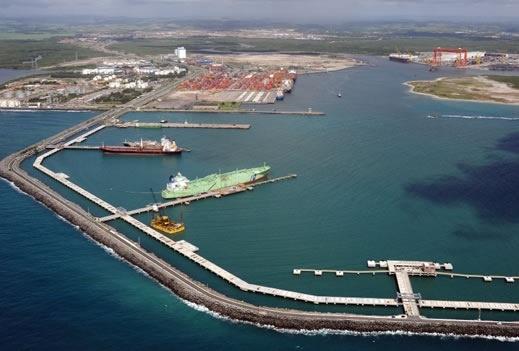
This case study is based on prior technical work by RECKON, developed before CONCRE Restoration. It is presented for educational and technical insight purposes and is not a CONCRE-executed project.
The source report was authored by RECKON – Consultoria em Engenharia Civil in partnership with TECNCON – Tecnologia do Concreto e Engenharia Ltda. for DECAL, dated August 25, 2014. The work belongs to the prior professional and technical portfolio of CONCRE Senior Technical Advisor Sérgio Pereira Pinto Lemos, M.Sc., Doctoral Candidate, associated with RECKON. The historical findings and criteria below are reported as documented in that source; they are not transferred as requirements or engineering conclusions for a Florida structure.
The Structure and Exposure
PGL2 is a reinforced and prestressed concrete docking pier at the Port of Suape in Ipojuca, Pernambuco, Brazil. The system comprised a central walkway and 10 dolphins. The report records a visual inspection of nine of those 10 dolphins, followed by testing and technical evaluation.
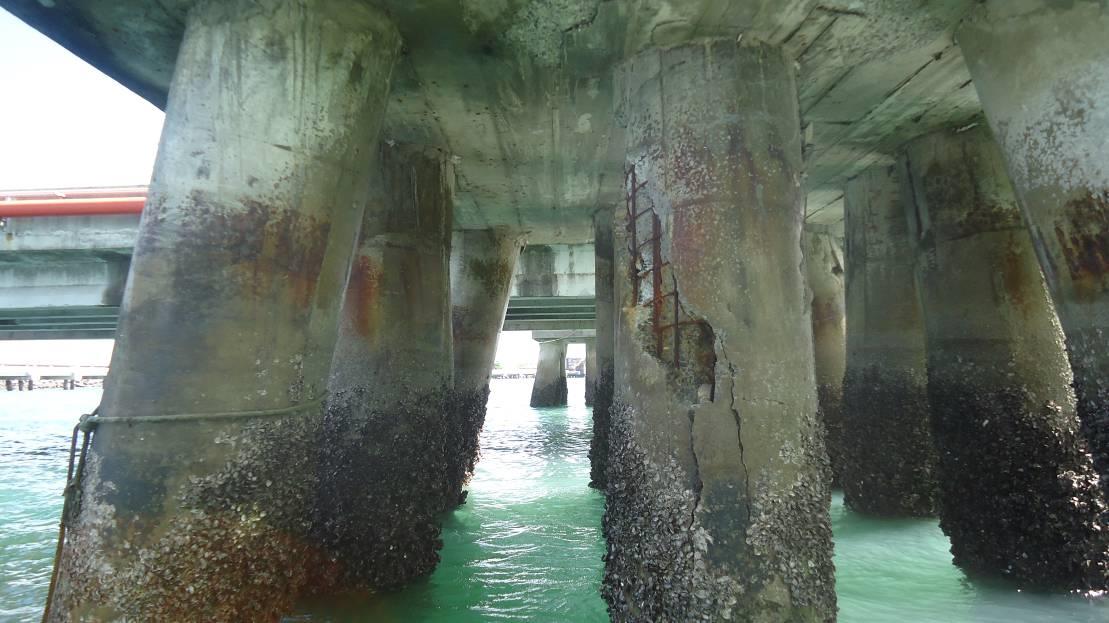
Its circular piles were described as 80 centimeters in diameter, hollow, precast reinforced/prestressed concrete elements extending approximately 19 meters from the seabed to the pile cap. Their tidal and splash-zone exposure created repeated contact with seawater, oxygen and wetting-and-drying conditions relevant to concrete durability and embedded reinforcement.
What the Visual Inspection Revealed
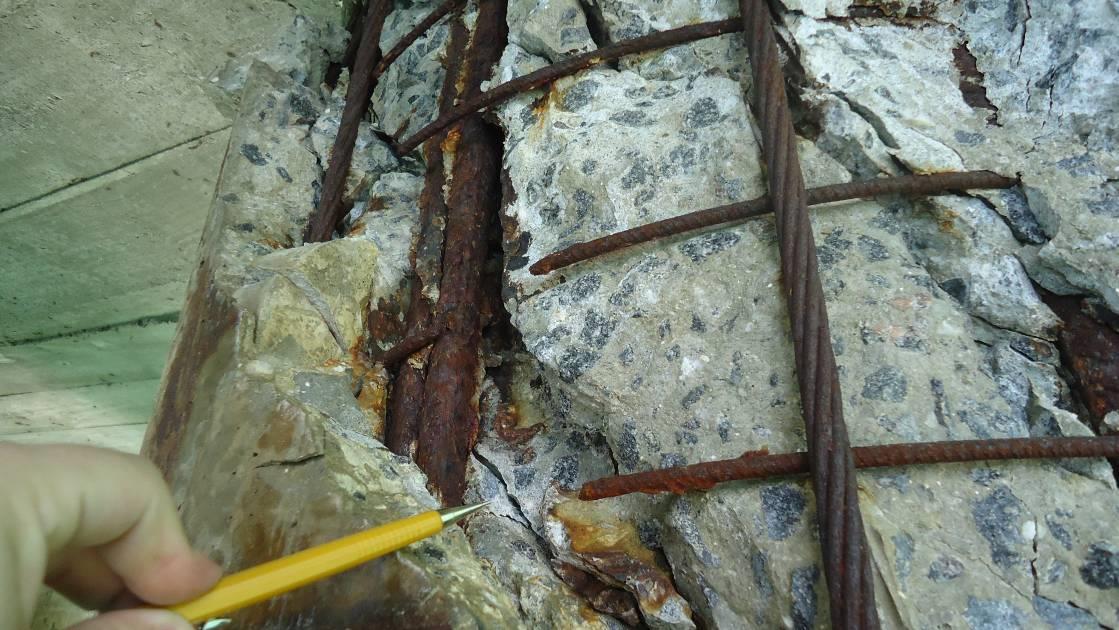
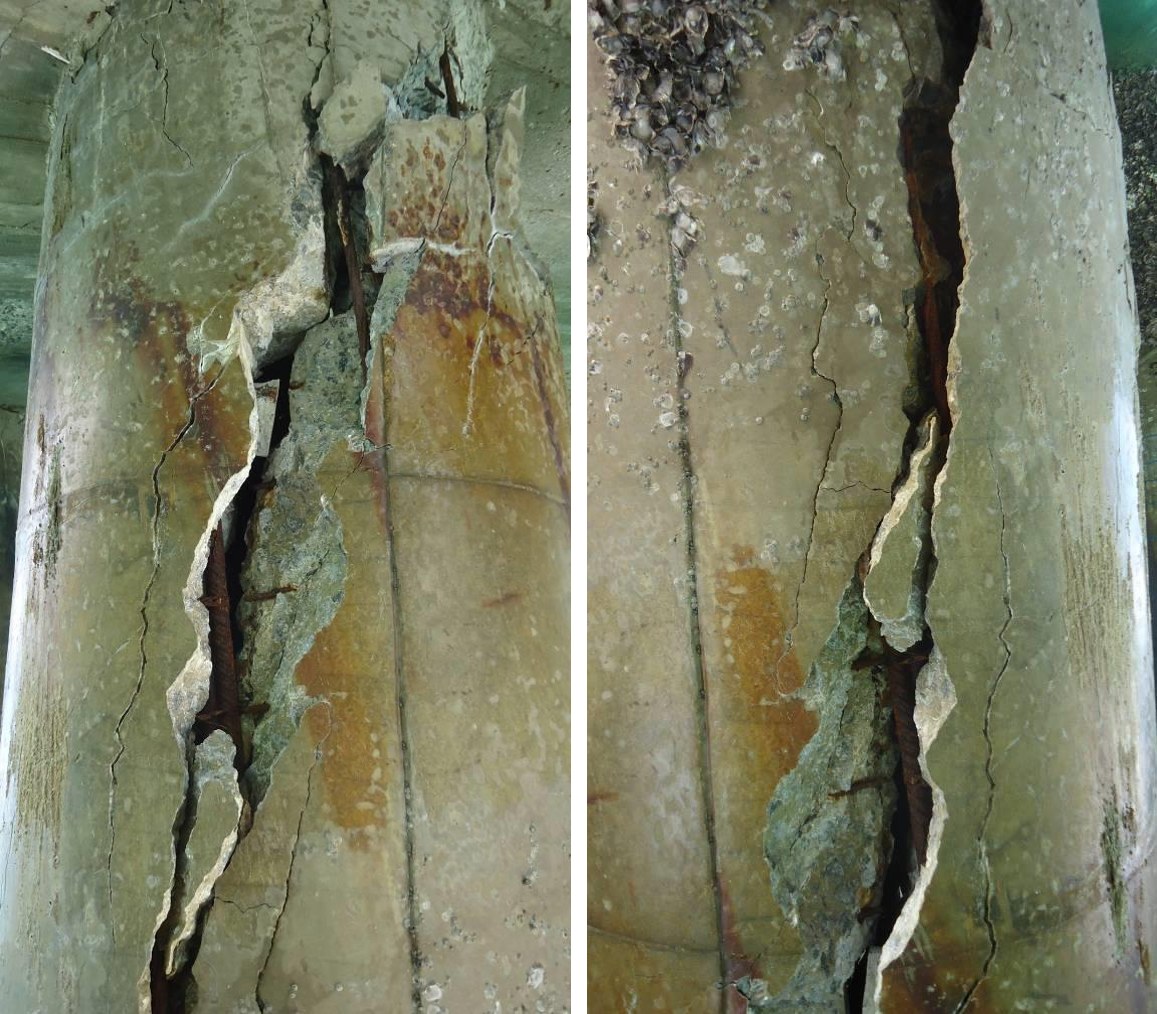
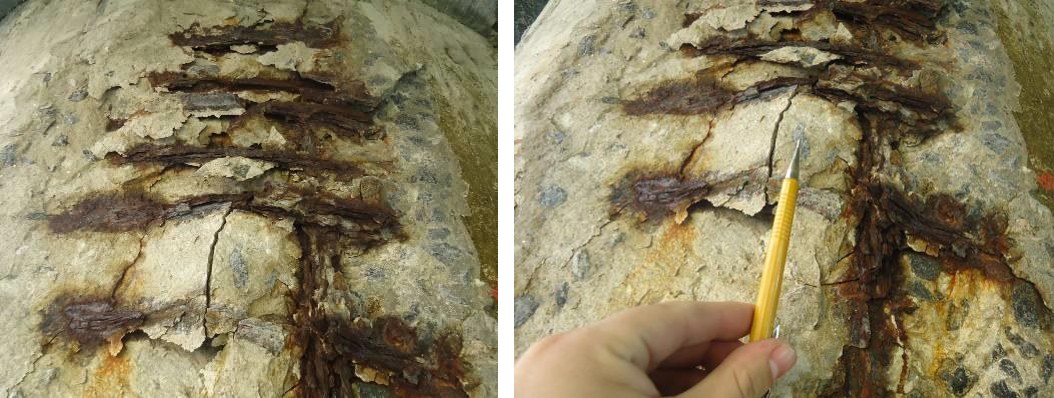
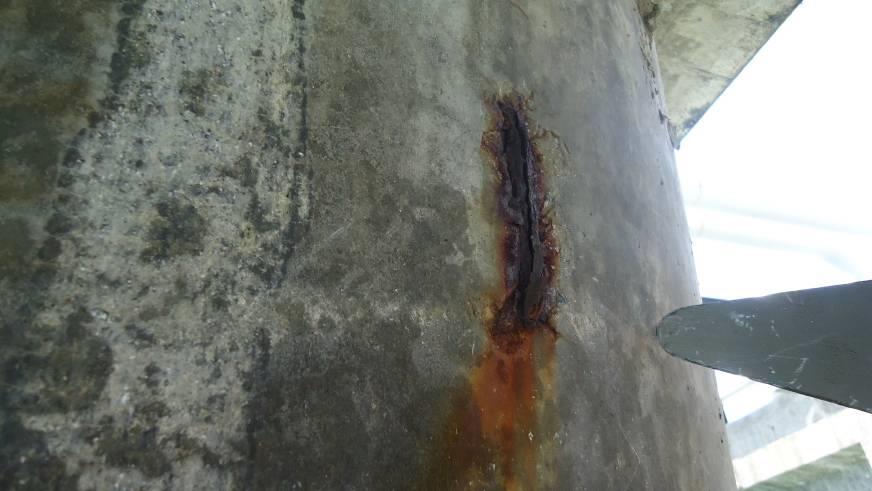
The report documented reinforcement corrosion, concrete spalling, cracking, loss of reinforcement section and insufficient concrete cover. In some piles, deterioration was described as severe, including loss of load-bearing condition. These observations established the need to look beyond isolated surface defects and evaluate the concrete, reinforcement and structural configuration together.
When Visual Evidence Is Not Enough
The investigation supplemented visual observations with field and laboratory testing. Rebound-hammer measurements covered 38 areas, with nine impacts per area before the exclusions and corrections described in the report. Nineteen concrete cores were extracted from nine dolphins for compressive-strength evaluation. The program also included water absorption and void-index testing, total chloride content and ultrasonic pulse measurements.
The specified design concrete strength was 50 MPa. None of the 19 extracted cores reached that value. The report calculated a mean core compressive strength of 35.2 MPa, a standard deviation of 5.0 MPa and a coefficient of variation of 14%. Applying the Helene (1993) criteria cited in the 2014 report, its absorption and void-index results characterized the concrete as deficient. These are historical source-report criteria, not current U.S. or Florida acceptance thresholds.
50 MPa
Specified design strength
35.2 MPa
Mean core strength
19
Extracted cores
1.68% Cl
Total chloride reported
4,365 m/s
Mean ultrasonic pulse
Values reproduced from the August 25, 2014 source report. Historical methods, standards and criteria remain those cited or applied by that report.
Chlorides and the Corrosion Mechanism
The report recorded total chloride content of 1.68% Cl and linked the deterioration to chloride contamination together with insufficient concrete strength, elevated void index and porosity, and insufficient cover. In reinforced concrete, chloride ingress can disrupt the passive condition that normally protects embedded steel. Where moisture and oxygen support corrosion, the resulting products can expand, contribute to cracking and spalling, and accompany progressive loss of reinforcement section.
The case demonstrates why one result should not be read in isolation. Exposure, cover, concrete quality, visible distress, laboratory measurements and reinforcement condition formed a connected body of evidence in the source report. The mean ultrasonic pulse value of 4,365 m/s was one part of that broader assessment, not a standalone conclusion about structural adequacy.
A Structural Condition Beyond Surface Repair
At inclined pile-to-cap connections, the report identified an as-built condition described as producing a hinge-like effect not conceived in the structural design. Cracking was documented in that region. This discrepancy between execution and design changed the nature of the problem: local concrete repair could address damaged material, but it could not by itself establish the structural consequences of the connection condition.
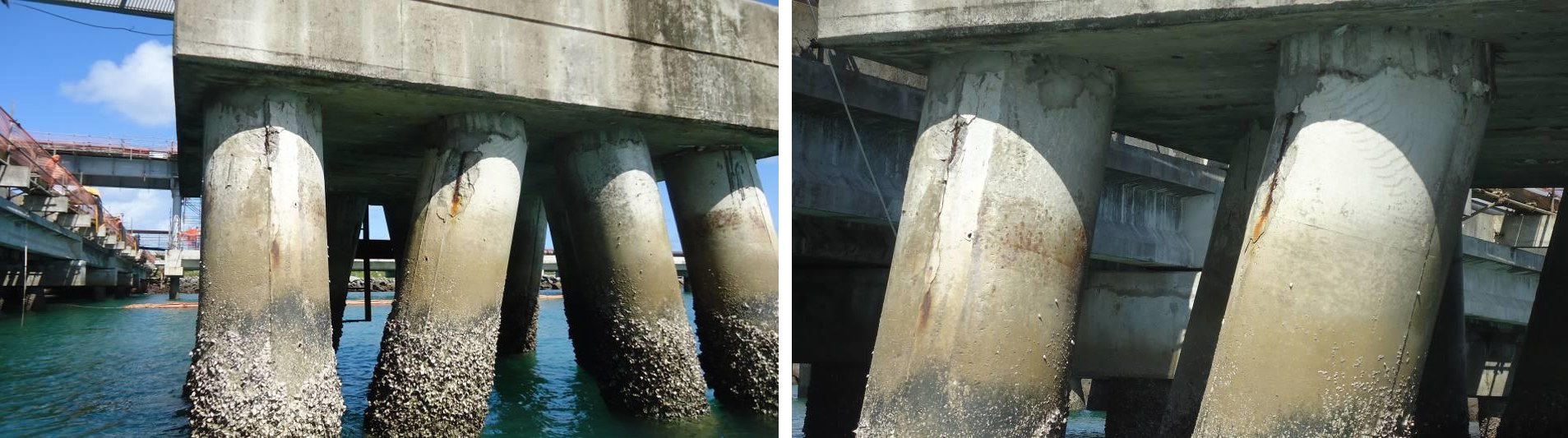
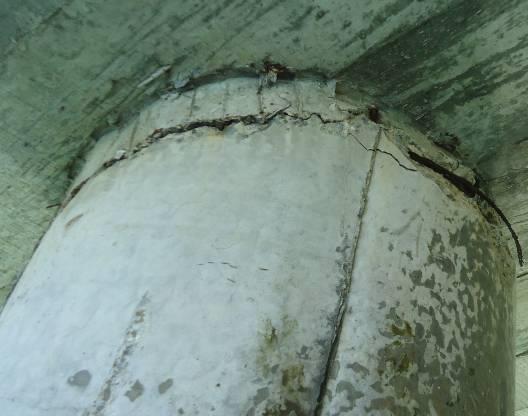
The report recommended immediate pile repair together with structural analysis, noting that repair alone might be insufficient given the identified project/execution nonconformity. That distinction remains essential: restoration work and structural evaluation answer different questions and carry different professional responsibilities.
What This Case Teaches Restoration Teams
- Investigate before defining repair: visible distress establishes where to look, not the complete cause or structural consequence.
- Correlate visual evidence with field and laboratory testing rather than relying on a single measurement.
- Document reinforcement condition and concrete cover because both affect how exposure reaches embedded steel and how repair limits are understood.
- Distinguish concrete repair from structural evaluation when distress involves load path, connection behavior or discrepancies between design and execution.
- Treat marine exposure as a durability condition that must inform investigation, materials, detailing, protection and long-term planning.
These are educational lessons drawn from the 2014 RECKON/TECNCON report. They do not represent work executed by CONCRE and do not diagnose or specify repairs for another structure.
Diagnose. Document. Control.
The Suape case aligns with CONCRE's current technical philosophy without becoming a CONCRE project. Diagnosis belongs to the qualified design professionals responsible for the structure. Documentation makes observed conditions, testing, repair limits and decisions traceable. Control connects approved requirements to field execution, verification and close-out.
CONCRE observes, maps and quantifies. The Florida PE evaluates, diagnoses and specifies. This historical Brazilian case study is educational and does not constitute engineering advice for a Florida project.
Source and Credits
Source: Laudo Técnico – Inspeção do píer PGL2 do porto de Suape/PE, RECKON – Consultoria em Engenharia Civil in partnership with TECNCON – Tecnologia do Concreto e Engenharia Ltda., prepared for DECAL, August 25, 2014.
Prior professional/technical portfolio context: Sérgio Pereira Pinto Lemos, M.Sc., Doctoral Candidate, associated with RECKON for the source work; currently Senior Technical Advisor – Structural Rehabilitation & Durability at CONCRE Restoration.
This case study is based on prior technical work by RECKON, developed before CONCRE Restoration. It is presented for educational and technical insight purposes and is not a CONCRE-executed project.
Related insights
More from CONCRE Insights.
CONCRE Technical Insights | 01
When Cracks Tell a Deeper Story: Diagnosing Reinforced Concrete Deterioration in Coastal Buildings
Lessons from a comprehensive investigation of structural columns at Acqua Marine, a coastal residential development in Reserva do Paiva, Brazil.
CONCRE Technical Note
How Much Reinforcement Has Been Lost? Understanding Residual Rebar Section in Concrete Restoration
Once concrete is opened, corrosion stops being a general observation and becomes measurable information. This note explains residual diameter, cross-sectional loss, pitting and corrosion-rate measurement — and why the Engineer of Record determines what any of it means structurally.
Milestone inspection repairs
Your Florida Milestone Inspection Identified Structural Deterioration — What Happens Next?
A Milestone Inspection report is not the end of the process. When it identifies structural deterioration, the report becomes the basis for engineering decisions, a defined repair scope, contractor execution and documented reinspection.
Next step
Bring the evidence into the restoration plan.
Share the Engineer of Record's report, drawings and repair documents so CONCRE can review field scope, access, quantities and execution requirements.