
Façade Restoration
Facade Restoration in South Florida
Concrete, stucco, slab edges, sealants, waterproofing interfaces and protective coatings restored as one coordinated building-envelope scope under the engineer's documents.
One connected scope
The façade is a system, not a surface.
Concrete, stucco, joints, openings, waterproofing transitions and coatings meet on the same elevation. Treating one layer without coordinating the adjacent interfaces can leave the envelope incomplete.
CONCRE plans access, prices and maps the approved scope, executes the repair documents, tracks quantities, coordinates QA/QC and assembles close-out records. The Florida PE or Engineer of Record evaluates the condition, determines structural significance and defines repair details, removal limits, supplemental reinforcement, shoring and other engineering requirements.
For boards and property managers, the goal is one traceable façade program rather than disconnected concrete, stucco, sealant and painting activities.
CONCRE observes, maps and quantifies. The Florida PE evaluates, diagnoses and specifies.
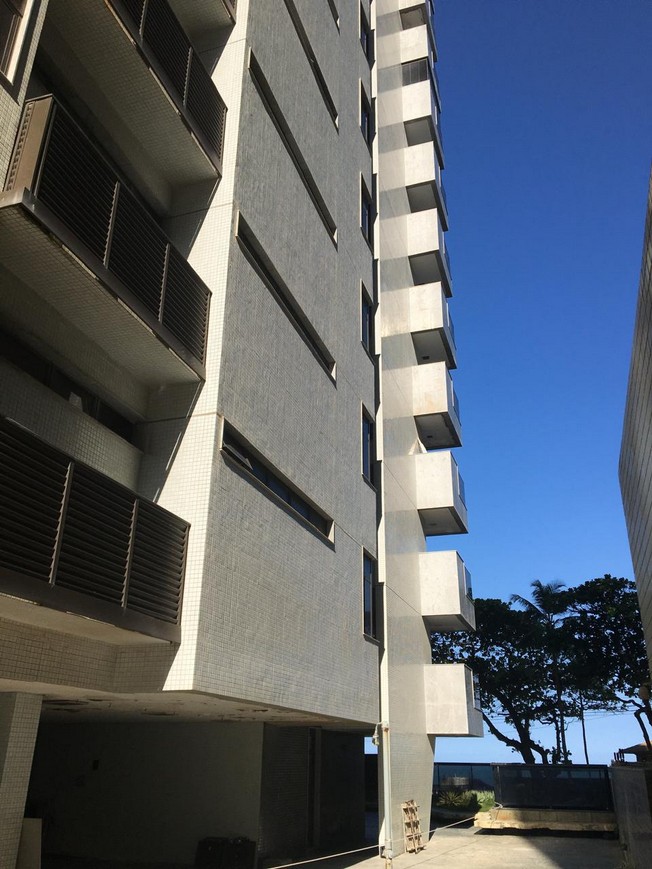
Observable conditions
What boards and managers may see from the exterior.
These observations help organize the next step. They are not diagnoses, proof of a leak source or determinations of structural significance.
Cracking
Cracks in concrete, stucco, coatings or at transitions are observations for professional evaluation; appearance alone does not establish cause or structural significance.
Rust staining
Staining near reinforcement, embeds or edges may warrant closer evaluation and mapping before a repair scope is defined.
Delamination and spalling
Hollow-sounding or missing concrete can extend beyond what is visible and is quantified as field verification proceeds.
Exposed reinforcement
Visible steel and concrete loss are documented and referred to the EOR for the applicable repair requirements.
Stucco distress
Debonding, cracking and localized loss are coordinated with the substrate repair and finish-system requirements.
Failed sealants
Open, split or debonded joints can interrupt envelope continuity at windows, panels and transitions.
Coating failure
Peeling, blistering, chalking or loss of adhesion can indicate a finish-system condition requiring substrate review.
Water staining and efflorescence
Moisture-related evidence is mapped without claiming that visual or thermal observations prove a leak source.
Scope
What façade restoration covers.
The exact combination follows the EOR's documents and the contract. CONCRE coordinates the included systems so repair and protection meet at their interfaces.
Structural concrete
Engineer-directed repair of spalling, delamination and reinforcement-related deterioration on walls, bands, columns, beams and projections.
Slab edges, eyebrows and projections
Repeated exposed elements repaired and reprofiled to the issued details, with interfaces recorded by elevation and level.
Stucco
Removal and replacement of unsound stucco, crack treatment and finish matching as defined by the approved envelope scope.
Joints and sealants
Replacement at control joints, expansion joints, panel transitions and perimeters where included in the documents.
Waterproofing transitions
Continuity at decks, walls, openings and adjacent systems where the project documents require it.
Coatings and exterior painting
Specified protective or finish systems installed after required concrete, stucco and substrate preparation.
Railing, embed and window interfaces
Included only where applicable to the approved scope, with engineering requirements retained by the EOR.
South Florida exposure
Moisture, salt-laden air, wind-driven rain, heat and UV meet at the envelope.
Coastal exposure can contribute to demanding service conditions at concrete cover, joints, coatings and transitions. The observed pattern must still be evaluated building by building before a cause or repair requirement is established.
Façade restoration coordinates the structural substrate with the systems intended to shed water and protect the exterior. A coating cannot replace required concrete or substrate repair, and a concrete patch does not by itself restore every adjacent envelope interface.
CONCRE works across Miami-Dade County, Broward County and Palm Beach County on condominium, co-op and commercial building scopes.
Access and occupied buildings
The work starts with a safe, workable elevation plan.
Swing stages, suspended access, lifts or mast climbers are selected as project-appropriate. Roof rigging, anchors and engineering are addressed where required, alongside protection for residents, pedestrians and property.
- Sequence work by elevation, level, bay or residential stack.
- Coordinate window, balcony and unit access with management in advance.
- Maintain protection at entrances, walkways and occupied areas.
- Plan containment, daily clean-down, deliveries and material staging.
- Communicate active zones and schedule changes through building management.
Execution
A controlled sequence under the EOR's documents.
- 01
Survey and mapping
Record elevations, access constraints and identified work with consistent location IDs.
- 02
Access and protection
Install the project-appropriate access system, containment and protection for residents, pedestrians and property.
- 03
Sounding and marking
Verify and mark areas where the documents require it, without replacing the engineer's evaluation.
- 04
Controlled removal
Remove unsound material to the limits and sequence established by the repair documents.
- 05
Reinforcement and substrate preparation
Prepare steel and substrate and install supplemental reinforcement only as the EOR directs.
- 06
Repair reconstruction
Place and cure the specified repair materials, restoring the required profile and geometry.
- 07
Envelope reinstatement
Restore stucco, sealants, waterproofing transitions, coatings and finishes included in the approved scope.
- 08
Documentation and close-out
Reconcile quantities, photographs and completed locations for review under the contract and EOR process.
Façade mapping
Estimated → Identified → Verified → Repaired.
Location IDs by elevation, level and bay keep photographs, quantities and repair stages tied to the same place.
Estimated quantities support preconstruction planning. Identified locations establish the field inventory. Verified quantities reflect sounding and opening where specified. Repaired quantities document completed work.
That record supports unit-price and change documentation, but it does not approve scope or payment. The contract and EOR process govern review and acceptance.
Before pricing
What the board or property manager should have ready.
- Current engineer's report, drawings, specifications and issued repair details
- Building elevations, available plans and known repair history
- Observable-condition photographs organized by elevation or location
- Known roof, anchor, rigging and suspended-access information
- Resident, balcony, window, entrance and common-area access constraints
- Existing coating, sealant, stucco or waterproofing product information when available
- Desired phasing, blackout dates, work hours and building-operational constraints
- Bid form, allowances, unit-price structure and close-out requirements
Questions
Façade restoration questions.
- What is included in façade restoration?
- The approved scope may include structural concrete repairs, slab edges and projections, stucco, joints and sealants, waterproofing transitions, protective coatings and exterior painting. Window, railing and embed interfaces are included only where the engineer's documents and contract identify them.
- Is façade restoration only concrete repair?
- No. Concrete repair is often one part of a connected building-envelope scope. Stucco, sealants, waterproofing transitions and coatings may also need reinstatement so repaired areas return to a continuous exterior system.
- Why can façade repair quantities change after sounding or opening?
- A visual survey cannot establish every limit of concealed delamination or unsound material. Sounding and controlled opening can identify a different extent. CONCRE records estimated, identified, verified and repaired quantities by location; approval and payment remain governed by the contract and Engineer of Record.
- Does CONCRE perform the engineering inspection or design?
- No. The Florida PE or Engineer of Record evaluates the condition, diagnoses causes and structural significance, and defines repair details, removal limits, supplemental reinforcement, shoring and other engineering requirements. CONCRE executes the approved documents.
- Can façade restoration be phased on an occupied condominium?
- Yes. Access, protection and work zones can be sequenced by elevation, level or stack, with resident notices and coordination around windows, balconies, entrances and common areas. The project-specific sequence depends on the building and approved scope.
- How are swing-stage and access requirements handled?
- CONCRE plans swing stages, suspended access, lifts or mast climbers as project-appropriate. Roof rigging, anchors, loads and any required engineering are addressed by the responsible qualified parties before use.
- Does exterior painting solve concrete deterioration?
- No. Painting and coatings do not replace required substrate or structural repair. Deteriorated concrete and other underlying conditions must be addressed according to the approved scope before the specified finish system is installed.
- Where does CONCRE perform façade restoration?
- CONCRE serves Miami-Dade County, Broward County and Palm Beach County.
General information about restoration contracting. Nothing on this page is engineering or legal advice, and no building condition is diagnosed here.
From CONCRE Insights
Further technical reading.
Concrete spalling guide
Concrete Spalling in Florida Buildings: Causes, Warning Signs, and When Repair Is Needed
Spalling is visible concrete loss, but the condition behind it may extend beyond the broken surface. This guide helps Florida owners recognize what they can observe, what requires licensed professional evaluation, and how an engineered repair is controlled in the field.
Quantity control
How Are Concrete Repair Quantities Measured? From Inspection to Final Repair
You cannot control what you cannot quantify. Concrete repair quantities move from estimated to identified, verified and repaired. This guide explains how each stage is measured, documented and approved so owners can follow the scope with evidence.
Preventive building preservation
Don't Wait 30 Years: Why Concrete Condition Reviews Should Start Before Florida's Milestone Inspection
Milestone Inspection is a regulatory milestone. Building preservation is a continuous process. A condition-informed review cycle can help boards establish a baseline, recognize change and organize the right response before statutory age.
Project review
Send the engineer's report, drawings and elevations.
We will review the approved façade scope, access constraints, repair types, quantity structure and documentation requirements for execution.