
Sealants & Expansion Joints
Sealants & Expansion Joints in South Florida
Control, expansion and perimeter joints removed, prepared and resealed to the specified system — so the building can move without opening a path for water.
Joints and movement
A joint is designed to move. The sealant has to keep up.
Buildings expand, contract and deflect. Joints accommodate that movement, and sealants or joint systems close them against water. When sealants harden, split or lose adhesion, the joint stops doing its job.
CONCRE removes failed sealant and joint systems, prepares the joint faces, installs backer and primers and applies the specified sealant or joint system to the designed geometry.
Joint sizing, movement capability and product selection belong to the design professional. This page covers joints; broader water-management continuity is on the envelope page.
CONCRE observes, maps and quantifies. The Florida PE evaluates, diagnoses and specifies.
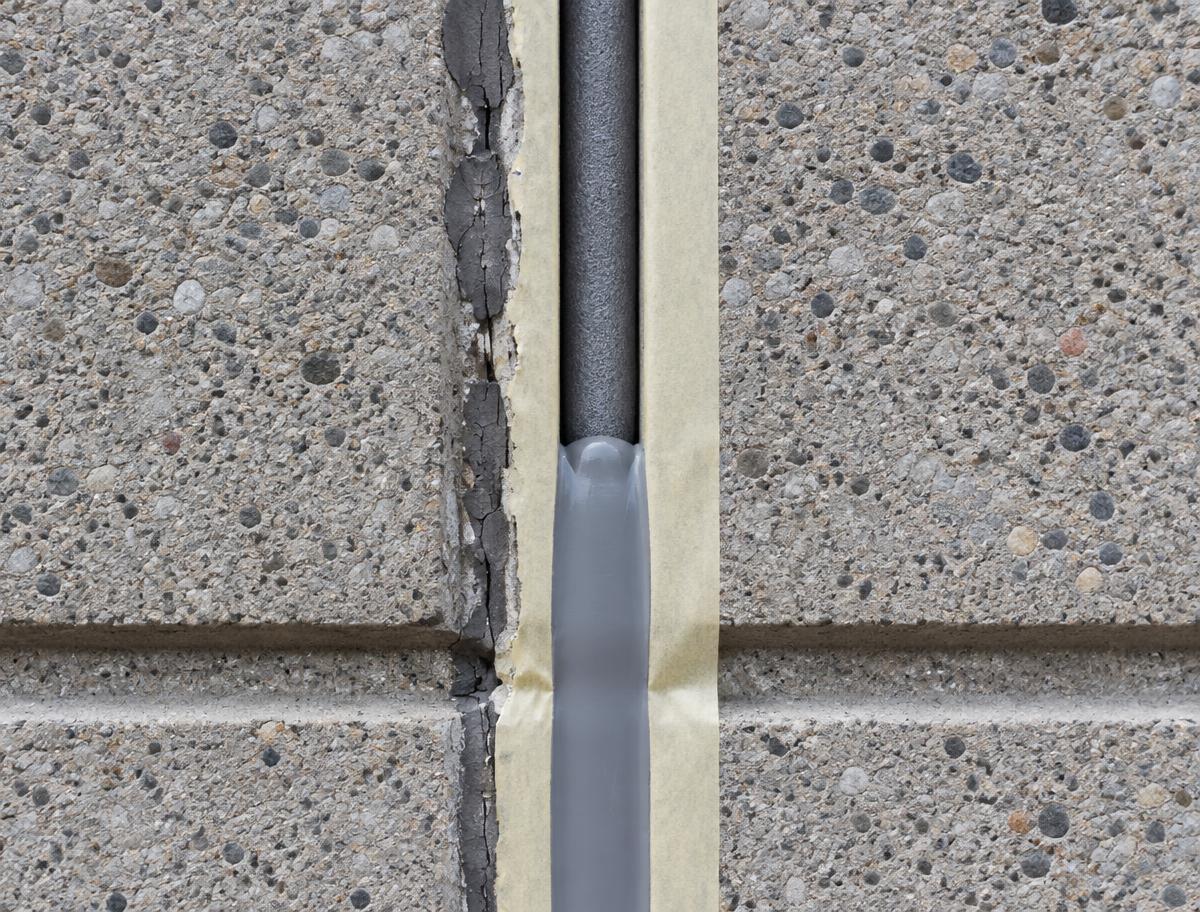
Observable conditions
Signs a joint is no longer performing.
Observations to map by location and refer where needed.
Adhesive failure
Sealant pulled away from one or both joint faces.
Cohesive splitting
Tears through the middle of the sealant bead.
Hardening and cracking
Aged sealant that has lost elasticity.
Missing or bridged joints
Joints painted over, filled or never sealed.
Damaged expansion joint systems
Torn or displaced joint covers and seals at decks and garages.
Edge spalling at joints
Concrete damage at joint edges, referred for concrete repair.
Scope
What sealant and joint work covers.
Products, joint geometry and preparation as specified.
Control joints
Stucco and wall control joints resealed with the specified product.
Expansion joints
Building and deck expansion joint seals and systems replaced.
Window and door perimeters
Perimeter sealant replaced where included in scope.
Panel and transition joints
Joints between dissimilar materials and systems.
Parking garage joints
Deck, cove and expansion joints in traffic areas.
Joint-edge repair
Concrete edge repair before sealing, as the documents direct.
Preparation
Most sealant failures start with preparation, not the product.
Clean, sound, dry joint faces, correct backer and correct geometry decide how a sealant performs.
Adhesion tests and mock-ups are carried out where the specification or manufacturer requires them, and results are recorded with the joint location.
CONCRE serves Miami-Dade County, Broward County and Palm Beach County.
Execution
How joints are replaced.
- 01
Joint survey
Joints recorded by type, length and location.
- 02
Removal
Old sealant and backer fully removed.
- 03
Edge preparation
Joint faces cleaned and repaired where specified.
- 04
Backer and primer
Backer rod or bond breaker and primer installed.
- 05
Sealant installation
Sealant applied and tooled to the designed profile.
- 06
Testing and records
Adhesion checks where required, with linear quantities logged.
Before pricing
What helps price a joint scope.
- Specification with joint types and approved products
- Elevations or plans showing joint locations
- Estimated linear footage by joint type if available
- Testing, mock-up and warranty requirements
- Access constraints by elevation and garage level
- Unit-price structure per linear foot
Related services
Related scopes.
Questions
Sealant and joint questions.
- Can new sealant be applied over the old sealant?
- Generally not. Specifications typically require removal of failed sealant and preparation of the joint faces so the new sealant can bond. CONCRE follows the specified preparation.
- Who decides which sealant to use?
- The design professional specifies joint geometry, movement capability and products. CONCRE installs the specified system to the documents and manufacturer requirements.
- How is sealant work priced?
- Usually per linear foot by joint type, with joint-edge repairs priced separately where the documents call for them.
- Does resealing fix a leak?
- Only if the joint was the water path. Determining a leak source belongs to the design professional; CONCRE executes the specified joint work.
- Where does CONCRE work?
- CONCRE serves Miami-Dade County, Broward County and Palm Beach County.
General information about restoration contracting. Nothing on this page is engineering or legal advice, and no building condition is diagnosed here.
From CONCRE Insights
Further technical reading.
Parking garage condition awareness
Parking Garage Concrete Repair: Warning Signs Building Owners Should Not Ignore
Parking structures can remain in service while localized deterioration develops at decks, ramps, joints, beams, columns and soffits. Recognizing changes early helps owners document conditions and seek the right professional evaluation without treating a visible symptom as a diagnosis.
Balcony restoration
Why Balcony Slab Edges Demand Attention in Coastal Buildings
The slab edge is the thinnest, most exposed, most detailed line on a coastal tower — and the place where concrete repair, railing embeds and waterproofing all meet. Here is what is observable, what is not, and how the work is sequenced in an occupied building.
Preventive building preservation
Don't Wait 30 Years: Why Concrete Condition Reviews Should Start Before Florida's Milestone Inspection
Milestone Inspection is a regulatory milestone. Building preservation is a continuous process. A condition-informed review cycle can help boards establish a baseline, recognize change and organize the right response before statutory age.
Project review
Send the joint specification and elevations.
We will review joint types, quantities, access and testing requirements.