
Insights/Technical Restoration
Parking Garage Restoration: Coordinating Concrete Repairs, Waterproofing and Traffic Coatings
Coordinate engineer-defined concrete repairs, accepted substrates, specified protective systems and phased reopening with a clear record at every handoff.
|4 min read
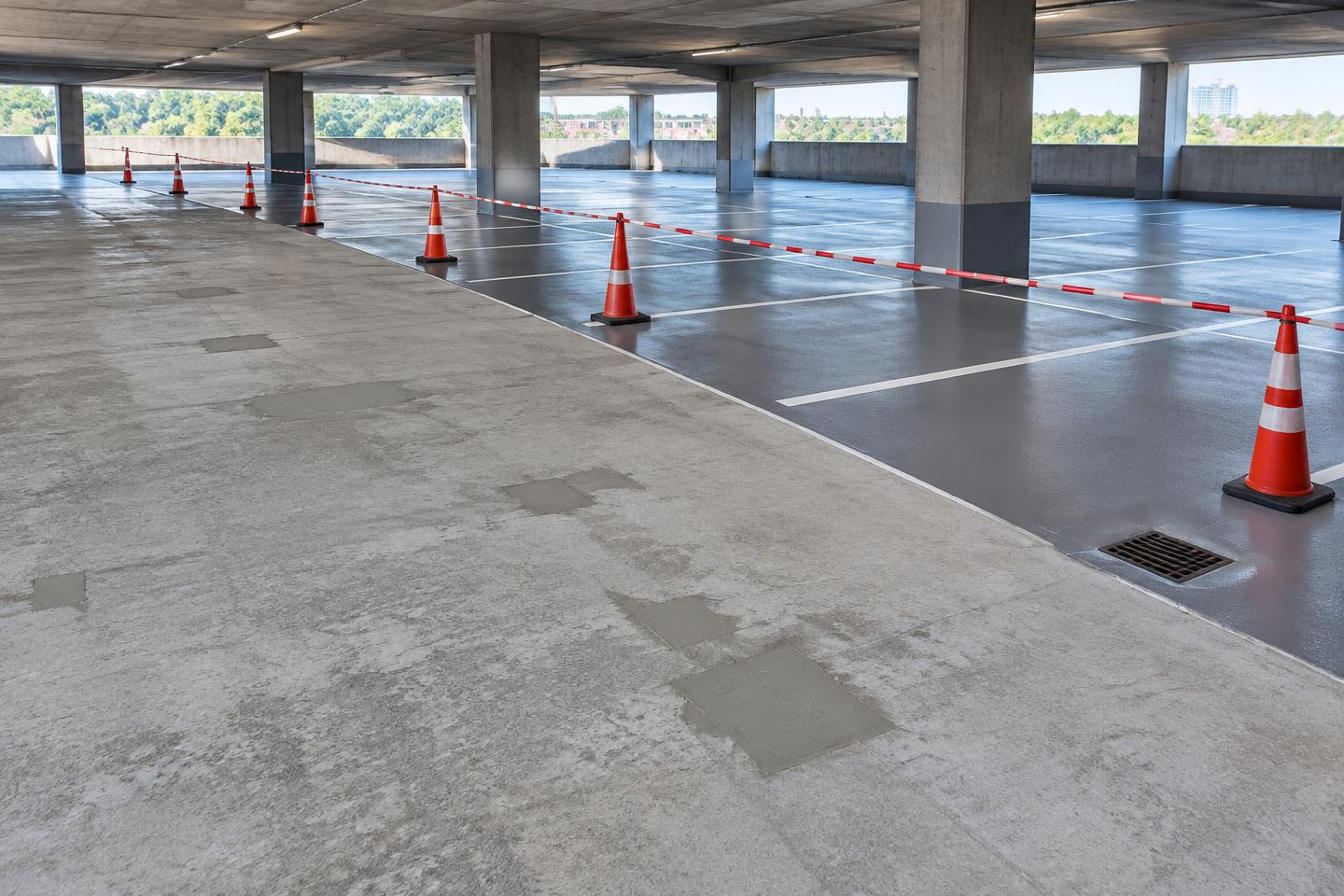
Concrete repair, waterproofing and traffic coatings meet on the same parking deck, but they are not interchangeable scopes. A new wearing surface does not resolve an engineer's structural finding, and a completed concrete patch is not automatically ready to receive a membrane. Owners should compare proposals by how the interfaces are coordinated, not only by the area of new coating promised.
This guide focuses on execution sequence after the responsible professional has defined the repair strategy. It is different from a warning-sign checklist: the question here is who accepts each stage, what evidence is kept and when the next trade can proceed. The approved documents, selected systems and project conditions control the actual sequence.
Start with engineer-defined repairs and a common scope
Keep the current structural drawings, repair details, waterproofing specifications and applicable addenda together. Identify the EOR or appropriate licensed professional, the contractor's responsibilities and any manufacturer review required by the specifications. Clarify which surfaces receive concrete repairs, which receive protective systems and where existing finishes remain. A coating quantity should not hide an undefined concrete allowance.
Estimates, opened repair quantities and completed quantities are different records. Define location IDs, units, inclusions and change-approval rules before work starts. If opening reveals additional deterioration or an unexpected embed, preserve the evidence and seek professional direction. Structural significance, reinforcement decisions and revised repair details are not a coating installer's field assumptions.
Make substrate acceptance a visible hold point
Complete the directed concrete repair and specified cure before the receiving system is installed. Preparation must follow the approved repair and coating requirements, including removal of unsuitable material and contaminants and the required surface profile. There is no universal preparation method or profile number that fits every repair mortar, primer or existing substrate.
Determine who accepts the prepared area and which checks are required. These may address substrate condition, moisture, bond, cleanliness or environmental limits when specified. Record the method, location and result against the project's criteria. A surface that looks clean is not automatically accepted. Obtain direction when requirements conflict rather than covering an unresolved condition to maintain a schedule.
Resolve compatibility across the whole assembly
Review repair materials, primers, membranes, wear layers, sealants and retained coatings as one coordinated assembly. Follow the project specifications and applicable manufacturer instructions for compatibility, preparation, application windows and cure. Do not assume that products described as waterproofing can be substituted for each other or applied over every existing finish.
Proposals should identify the selected system and the limits of its scope. Confirm approved treatment at repaired patches, transitions and terminations, and who resolves a discrepancy between product instructions and contract documents. Warranty terms, if offered, depend on their actual written conditions; a manufacturer's name or a new surface is not a guarantee of long-term performance.
Coordinate joints, drains and contributing conditions
Map expansion joints, construction joints, cracks, drains, penetrations and wall transitions before installation. Their treatments follow the approved details and professional direction; not every crack is routed, injected or bridged in the same way. A membrane should not conceal a condition still awaiting structural evaluation or an unresolved joint detail.
Document blocked drainage, ponding or recurring water observations and refer contributing conditions for review. Repairs to slope, drains or connections may belong to another defined scope. Ask whether those interfaces are included and when they must be completed. Waterproofing is not a substitute for engineering evaluation of the deck, and a traffic coating is not automatically the entire waterproofing design.
Phase access without skipping cure or acceptance
A garage may need phased work or full closure depending on the approved access and safety plan. Establish work-zone boundaries, vehicle and pedestrian routes, resident notices and any required emergency access. Coordinate delivery, preparation dust and debris handling with adjacent occupied areas. Management should know which bays are unavailable and what must happen before they reopen.
Reopening follows the selected system's approved cure and acceptance requirements under actual conditions, not a generic hour count. Different layers and uses may have different release criteria. Record installation times and relevant conditions where required, keep barriers in place and confirm the authorized release. A dry-looking surface or pressure to restore parking does not override the specified requirements.
Keep the handoff and close-out record
Before covering repaired concrete, collect required photographs, quantities and inspection records. During protection-system installation, maintain specified material, batch, preparation and application records, along with written direction and acceptance results. Link each phase to the same bay or location IDs so owners can connect the concrete work with the surface installed over it.
At close-out, identify completed areas, approved changes, outstanding items and any maintenance instructions or actual warranty documents. Define the package before mobilization. CONCRE organizes restoration execution and records under approved documents. CONCRE observes, maps and quantifies. The Florida PE evaluates, diagnoses and specifies. Construction records support professional review; they do not certify structural safety.
Frequently asked questions
Can a traffic coating replace required concrete repairs?
No. Engineer-defined concrete repairs and protective systems have different roles. Complete and accept the specified repair and substrate stages before the next system is installed.
When can parking bays reopen?
After the approved system-specific cure and acceptance requirements are met under actual conditions and the authorized release is confirmed. There is no universal reopening time.
What should a proposal say about joints and drains?
It should identify approved treatments, inclusions, exclusions, responsibilities and sequence at joints, drains and transitions. Refer unresolved contributing conditions for professional review.
Related pages
Related insights
More from CONCRE Insights.
Local inspection repair planning
Pompano Beach Building Safety Inspections: Planning Restoration When Repairs Are Required
From reported findings to engineer-defined repairs, comparable measured bids, permits, resident coordination and the responsible professional’s reinspection.
Preventive building preservation
Don't Wait 30 Years: Why Concrete Condition Reviews Should Start Before Florida's Milestone Inspection
Milestone Inspection is a regulatory milestone. Building preservation is a continuous process. A condition-informed review cycle can help boards establish a baseline, recognize change and organize the right response before statutory age.
Quantity control
How Are Concrete Repair Quantities Measured? From Inspection to Final Repair
You cannot control what you cannot quantify. Concrete repair quantities move from estimated to identified, verified and repaired. This guide explains how each stage is measured, documented and approved so owners can follow the scope with evidence.
Next step
Coordinate the garage repair scope
Discuss repair quantities, protection interfaces and access under approved project documents.