
Insights/CONCRE Technical Insights | 01
When Cracks Tell a Deeper Story: Diagnosing Reinforced Concrete Deterioration in Coastal Buildings
Lessons from a comprehensive investigation of structural columns at Acqua Marine, a coastal residential development in Reserva do Paiva, Brazil.
|8 min read
Technical Case Study by
Sérgio Pereira Pinto Lemos, M.Sc., Doctoral Candidate
Senior Technical Advisor – Structural Rehabilitation & Durability | CONCRE Restoration
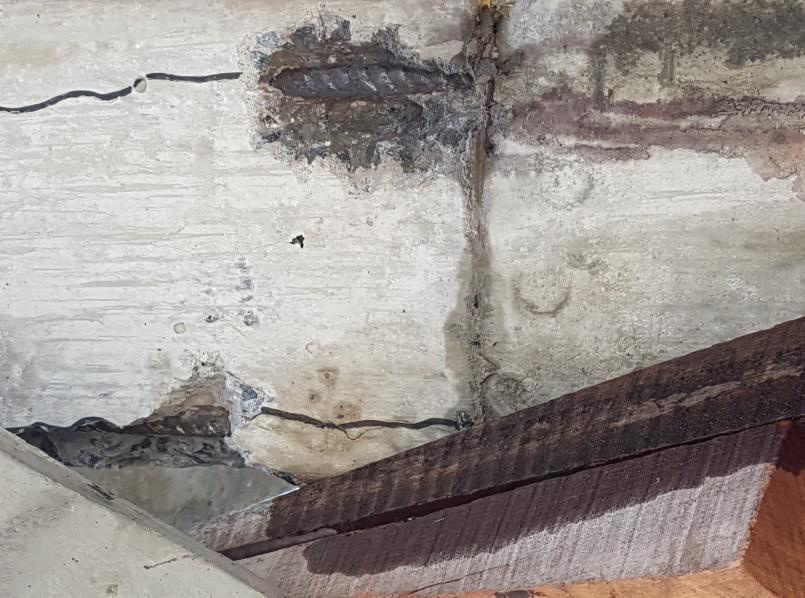
Cracks are among the most visible signs of distress in reinforced concrete, but visibility should not be confused with diagnosis. A crack may be related to restraint, shrinkage, thermal movement, loading, corrosion expansion, construction detailing, moisture pathways or a combination of causes. Treating every crack as a surface defect misses the deeper question: what condition inside the concrete allowed the crack to form, and what does that condition mean for repair strategy?
A crack is an observation. A diagnosis requires understanding what is happening inside the concrete.
This CONCRE Technical Insight draws from a selected prior technical case study by Sérgio Pereira Pinto Lemos involving Acqua Marine, a coastal residential development in Reserva do Paiva, Brazil. The investigation evaluated cracking in 13 structural columns and used a multi-method diagnostic program rather than relying on visual review alone. CONCRE did not perform the Acqua Marine project; the case is presented as technical experience that informs disciplined restoration thinking for coastal structures.
The Case Study: Thirteen Columns, One Larger Question
The Acqua Marine investigation focused on structural columns where cracking required explanation, not merely repair. In a coastal building, the presence of cracks can change the exposure condition of embedded steel by opening pathways for carbon dioxide, chlorides, oxygen and moisture. Once those agents reach reinforcement in sufficient concentration, the protective alkaline environment around the steel may be compromised and corrosion may begin or accelerate.
The technical value of the study is not that cracking was observed. The value is that the cracking was investigated through complementary methods: carbonation-depth testing, chloride testing, surface-hardness evaluation, ultrasonic testing, pacometry, concrete electrical resistivity and corrosion-potential measurements. Each method describes a different aspect of the condition. None, by itself, is a complete diagnosis.
Why Coastal Exposure Changes the Diagnostic Question
Coastal concrete is exposed to a demanding combination of chloride-bearing air, wind-driven rain, high humidity, frequent wetting and drying, elevated temperatures and aggressive service conditions at façades, balconies, columns, garages and building-envelope transitions. Chlorides can migrate through pores and cracks toward reinforcement. Moisture and oxygen support the electrochemical corrosion process. Cracks and construction joints can shorten the path between the exterior environment and the embedded steel.
For South Florida condominium and multifamily buildings, the relevance is direct. Marine exposure does not automatically explain every defect, but it raises the importance of confirming the deterioration mechanism before repairs are scoped. A surface crack on a coastal column may be primarily a crack-width and protection issue, or it may be the visible symptom of reinforcement corrosion, contaminated cover concrete, insufficient cover depth, or moisture movement through a failed coating or waterproofing transition.
Carbonation, Chlorides and Loss of Passivity
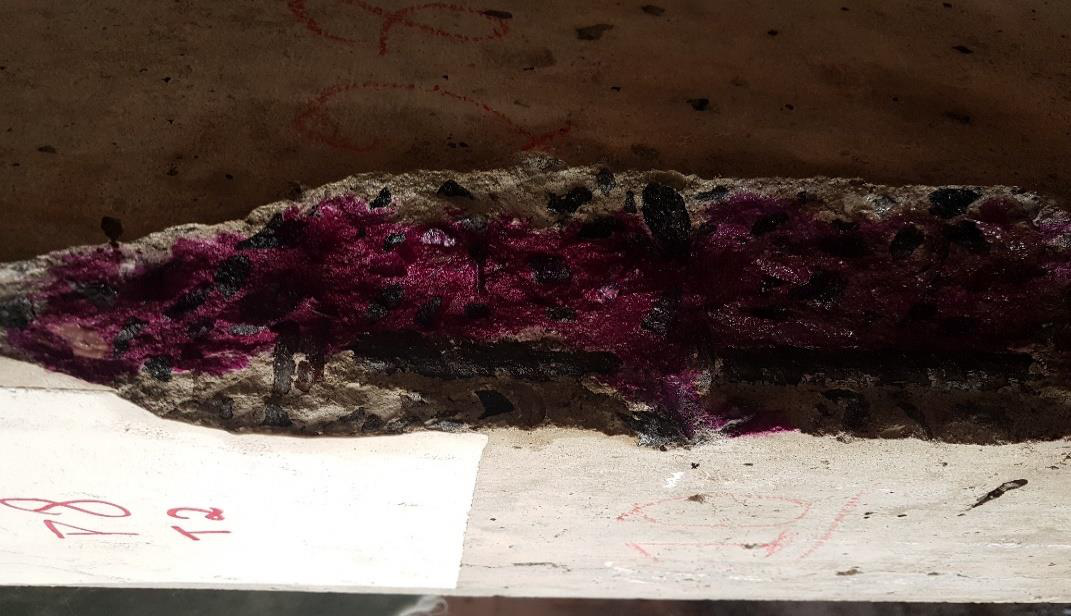
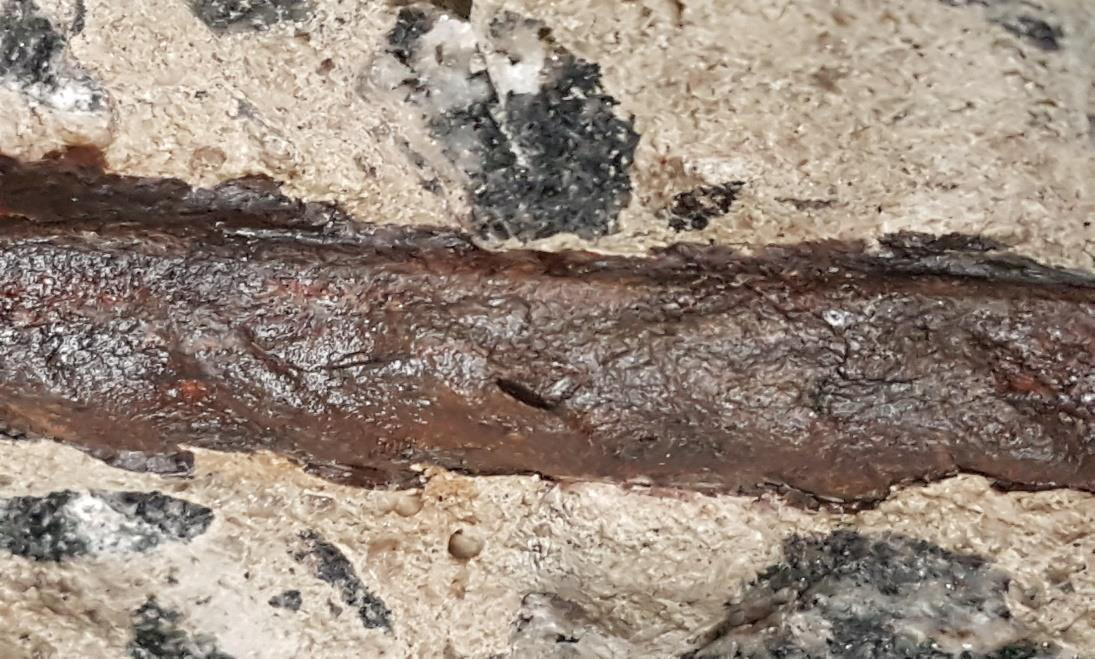
Reinforcing steel is normally protected by the high alkalinity of sound concrete. That alkaline environment supports a passive film on the steel surface. Deterioration often becomes significant when that passive condition is lost. Carbonation and chloride ingress are two common paths to that loss, and they can coexist within the same building.
Carbonation occurs as carbon dioxide from the air penetrates concrete and reacts with alkaline constituents, reducing pH over time. If the carbonation front reaches the reinforcement depth, the steel may lose passivity even without high chloride levels. Chloride-related corrosion is different: chloride ions can locally break down the passive layer, often producing more localized corrosion activity, especially where moisture and oxygen are available. Understanding which mechanism is active matters because repair strategy, protection requirements and expectations for adjacent concrete are not the same.
The Multi-Method Diagnostic Program
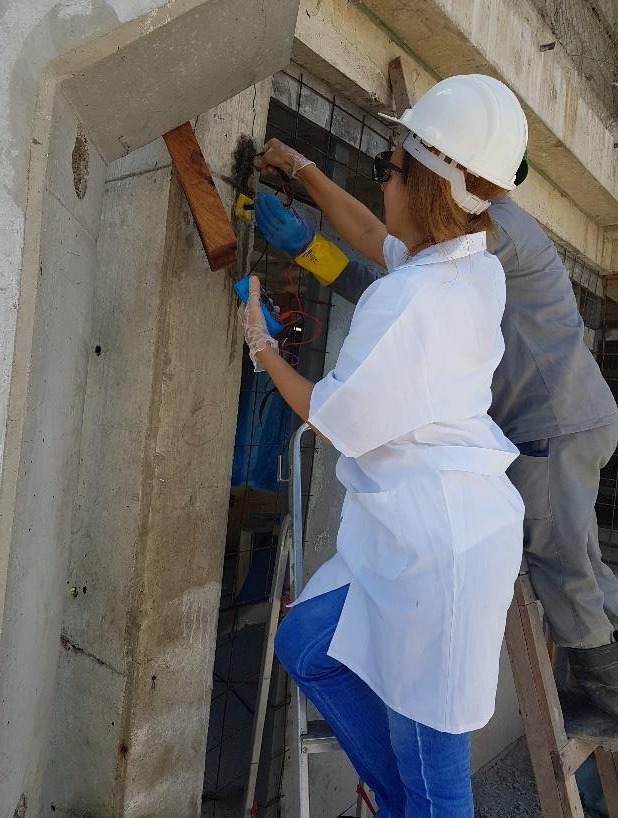
A reliable investigation does not ask one test to answer every question. In the Acqua Marine column study, the diagnostic program combined methods that look at chemistry, physical condition, reinforcement location and electrochemical corrosion risk. The combined program allowed the observed cracking to be interpreted against the internal condition of the concrete and embedded reinforcement.
- Carbonation-depth testing helps identify whether reduced alkalinity has advanced toward the reinforcement depth.
- Chloride testing helps determine whether chloride contamination is present at levels relevant to reinforcement corrosion risk.
- Surface-hardness evaluation provides a field indication related to concrete surface condition and relative uniformity, not a standalone structural conclusion.
- Ultrasonic testing helps evaluate concrete quality, continuity and comparative anomalies within the tested elements.
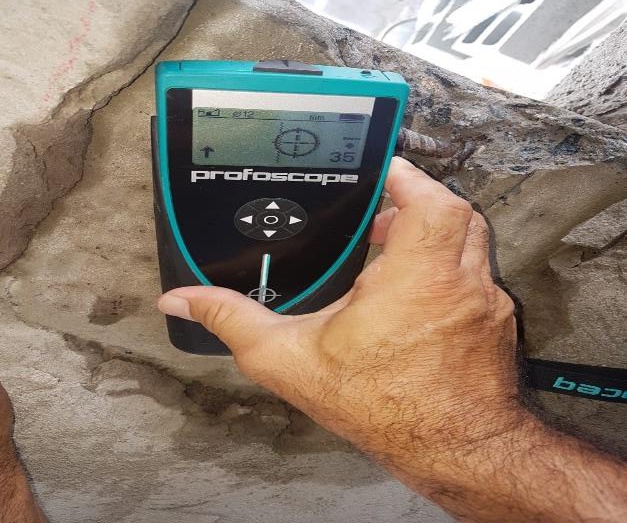
- Pacometry locates reinforcement and estimates cover, allowing chemical results and cracking observations to be compared with steel depth.
- Concrete electrical resistivity provides information related to the concrete's ability to support corrosion current under the tested moisture condition.
- Corrosion-potential measurements help identify areas with a greater probability of active corrosion, subject to professional interpretation and correlation with other data.
Why Test Results Must Be Correlated
The strongest diagnostic conclusions usually come from correlation. A carbonation depth has little meaning if reinforcement depth is unknown. A chloride result must be read with cover, cracking, moisture condition and exposure. A corrosion-potential reading identifies probability, not section loss. Resistivity can change with moisture and temperature. Surface hardness and ultrasonic values may indicate comparative variation, but they do not replace direct engineering judgment about deterioration mechanisms and structural significance.
Correlation also helps avoid the opposite errors of overreaction and underreaction. Treating every crack as corrosion may lead to unnecessary demolition. Treating every crack as cosmetic may leave active deterioration untouched. A disciplined investigation connects visible symptoms, exposure, reinforcement location, cover depth, chemical environment and electrochemical indicators before a repair strategy is selected.
Why Patch and Paint Is Not a Diagnostic Strategy
A patch-and-paint response treats the visible crack as the problem. In reinforced-concrete restoration, that is often too narrow. If corrosion products are expanding behind the cover concrete, a surface patch does not remove contaminated concrete, address the steel condition, restore cover, or interrupt the moisture and chloride pathway. If carbonation has reached the reinforcement, painting over the symptom may delay visual recurrence without resolving the mechanism.
This is not an argument that every crack requires invasive work. It is an argument that repair decisions should follow diagnosis. The right response may range from monitoring and sealing to localized concrete repair, corrosion mitigation, coating or waterproofing upgrades, or a broader structural restoration program. The Engineer of Record evaluates the condition and specifies the repair approach. The contractor's role is to execute the approved work in a controlled, documented way.
How Diagnosis Informs Repair Strategy
Once the deterioration mechanism is understood, repair strategy can be aligned with actual risk. Chloride-contaminated concrete may require different removal boundaries, protection measures or corrosion-mitigation decisions than carbonation-driven loss of alkalinity. Cracks associated with active reinforcement corrosion may require concrete removal, steel cleaning, reinforcement review and compatible repair materials. Cracks associated with movement or moisture pathways may require joint, coating, drainage or building-envelope corrections in addition to concrete repair.
For owners and managers, the practical benefit is decision quality. A diagnosis-based program is easier to phase, price, document and explain because the scope is tied to observed conditions and the mechanism behind them. It also gives the restoration contractor a clearer basis for access planning, sequencing, production tracking, inspection points and close-out records.
The CONCRE Technical Restoration Process
01
Inspect
Document existing field conditions.
02
Diagnose
Understand deterioration mechanisms identified through appropriate engineering investigation.
03
Classify
Connect observed conditions to defined repair categories.
04
Plan
Establish access, protection, sequencing, means/methods, manpower and production strategy.
05
Select
Confirm repair materials/systems correspond to project requirements and field conditions.
06
Execute
Perform work according to approved documents, procedures and manufacturer requirements.
07
Verify
Complete inspection points and quality-control requirements.
08
Document
Maintain traceability of conditions, repair locations, quantities, materials, inspections and completed work.
09
Close Out
Organize documentation of the completed restoration program.
CONCRE documents, maps and executes restoration work under approved documents. The Engineer of Record evaluates, diagnoses, specifies and provides engineering direction as required.
Technical Experience
Sérgio Pereira Pinto Lemos, M.Sc., Doctoral Candidate — Senior Technical Advisor – Structural Rehabilitation & Durability — brings professional experience in structural rehabilitation, reinforced-concrete pathology, durability assessment and investigation of existing structures. His work includes diagnostic evaluation of concrete deterioration mechanisms, interpretation of field and laboratory data, and translation of technical findings into repair-oriented decisions.
This experience contributes to CONCRE's technical procedures, restoration methodology, field quality-control systems and technical training. The objective is not to turn field crews into engineers, but to ensure that construction execution respects the technical basis of the project, the Engineer of Record's direction, manufacturer requirements and the documentation needs of the owner, manager and project team.
Relevance to South Florida Structures
South Florida buildings face many of the same durability pressures that make coastal case studies useful: marine salts, high humidity, wind-driven rain, intense ultraviolet exposure, occupied-building constraints and aging waterproofing or coating systems. The Acqua Marine case is not presented as a Florida acceptance standard, and its findings should not be transferred mechanically to another building. Its relevance lies in the method: visible cracking should lead to a structured technical question, not a generic cosmetic answer.
For condominium boards, property managers, general contractors and engineers, this matters when an existing building begins to show cracking, rust staining, delamination or recurring patch failures. A disciplined restoration program starts by separating observation from diagnosis, then aligning repair execution with the mechanism that the project team has identified.
Bridge From Engineering Knowledge to Field Execution
Technical investigation has limited value if it does not influence what happens on the scaffold, swing stage, balcony line or garage level. The bridge from engineering knowledge to field execution is made through clear repair categories, hold points, material requirements, surface preparation criteria, protection details, quantity tracking and photographic records. CONCRE's role is to make that bridge practical in the field while keeping engineering decisions with the responsible design professionals.
About CONCRE
CONCRE Restoration is a South Florida structural restoration contractor focused on concrete repair, structural rehabilitation, waterproofing and building-envelope restoration. Our approach connects technical understanding, field execution, manufacturer requirements, quality control and project documentation throughout the restoration process.
Structural Restoration | Concrete Repair | Waterproofing | Building Envelope
A crack is the beginning of the question.
A crack is an observation. Diagnosis is the process of understanding its story.
Frequently asked questions
What is concrete crack diagnosis?
Concrete crack diagnosis is the process of connecting visible cracking to the conditions inside and around the concrete, including reinforcement location, cover, carbonation, chloride exposure, moisture, corrosion indicators and structural context.
Can a crack in reinforced concrete simply be patched?
Sometimes a limited repair may be appropriate, but a patch should follow diagnosis. If the crack is related to corrosion, contaminated cover concrete, water ingress or movement, patching the surface alone may not address the deterioration mechanism.
Why do carbonation and chlorides matter?
Both can lead to loss of reinforcement passivity. Carbonation lowers the alkalinity of concrete as it advances inward, while chlorides can locally disrupt the passive layer around steel and contribute to corrosion in the presence of moisture and oxygen.
Why are multiple diagnostic tests used together?
Each test answers a different question. Carbonation, chloride content, cover depth, resistivity, corrosion potential, ultrasonic testing and surface-hardness observations must be correlated before conclusions are drawn about deterioration mechanisms and repair strategy.
How is this relevant to South Florida buildings?
South Florida coastal structures face marine salts, humidity, wind-driven rain and building-envelope exposure. The specific diagnosis belongs to the project professionals, but the disciplined method of correlating observations with test data is highly relevant to local restoration planning.
Who determines the repair approach after diagnosis?
The Engineer of Record evaluates the findings and specifies the required repair approach. CONCRE documents, maps and executes restoration work according to approved documents, procedures, manufacturer requirements and quality-control expectations.
Related insights
More from CONCRE Insights.
CONCRE Technical Note
How Much Reinforcement Has Been Lost? Understanding Residual Rebar Section in Concrete Restoration
Once concrete is opened, corrosion stops being a general observation and becomes measurable information. This note explains residual diameter, cross-sectional loss, pitting and corrosion-rate measurement — and why the Engineer of Record determines what any of it means structurally.
Milestone inspection repairs
Your Florida Milestone Inspection Identified Structural Deterioration — What Happens Next?
A Milestone Inspection report is not the end of the process. When it identifies structural deterioration, the report becomes the basis for engineering decisions, a defined repair scope, contractor execution and documented reinspection.
Concrete restoration
Concrete Spalling in South Florida Condominiums: Causes, Warning Signs & Repair
Spalling is visible evidence that concrete has separated or broken away. Understanding what can be observed, what requires professional evaluation and how repairs are executed helps condominium associations plan a disciplined response.
Next step
Turn visible deterioration into an executable restoration plan.
Send the engineer's report, drawings, photos or repair documents, and CONCRE will review the scope, quantities, access and documentation requirements for the field work.